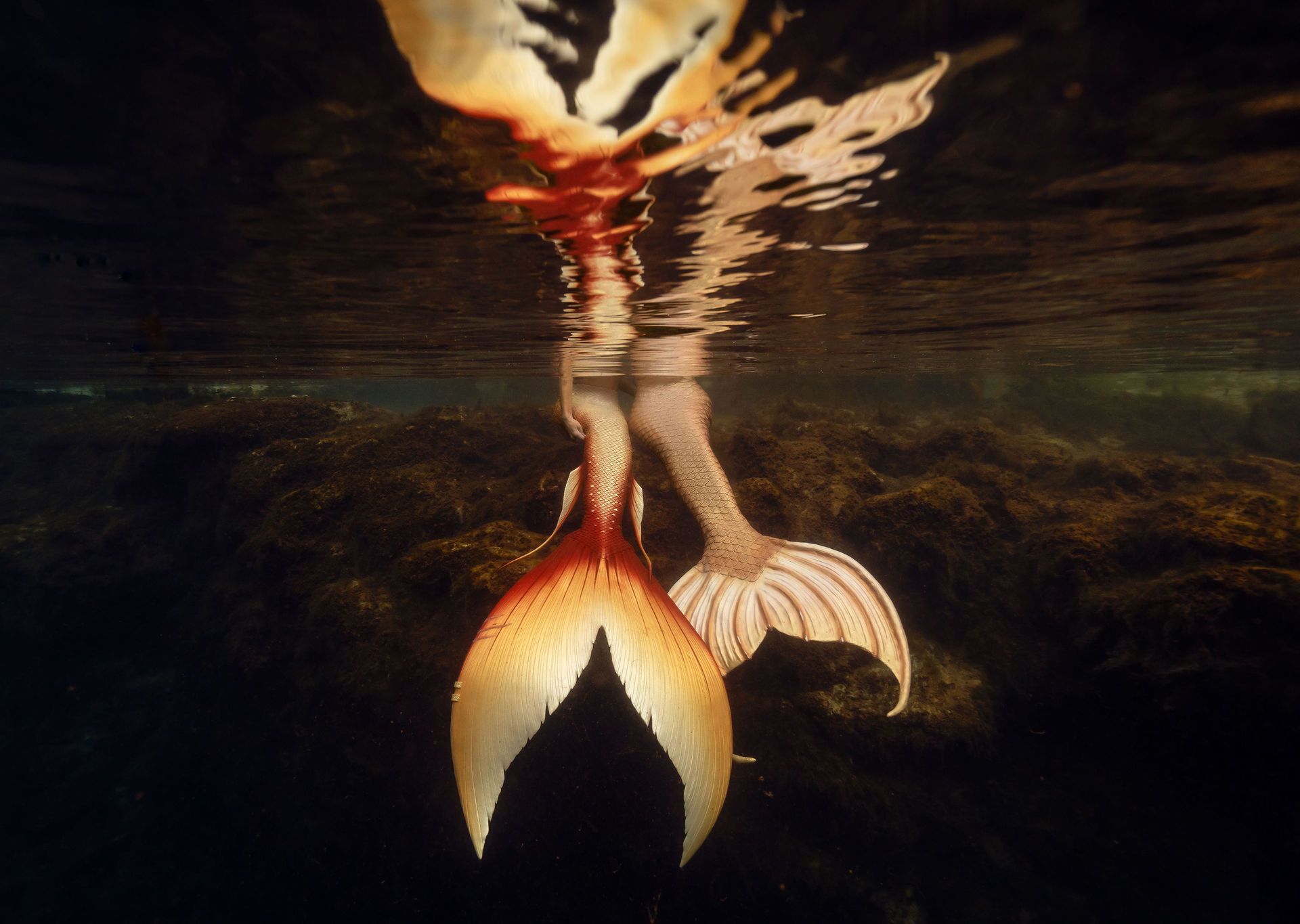
A mermaid photoshoot is the most joyful session I photograph. It is also the one people research the longest before they book, because almost nothing about it is obvious: which tail, which water, how long you can hold your breath, whether you need to swim well. This guide answers all of it — from picking your first tail to what the finished images cost.
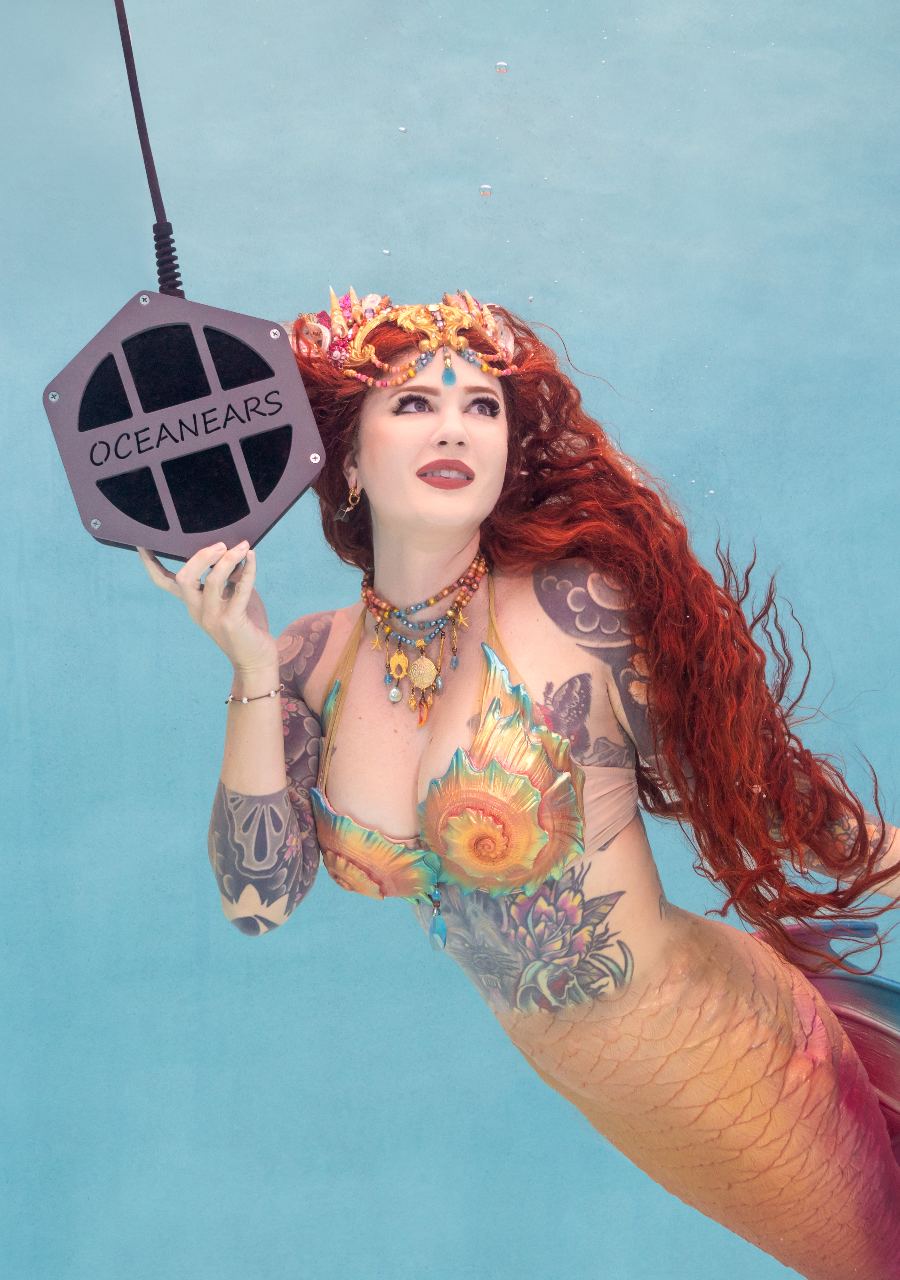
Tails fall into three broad groups. Fabric tails are light, cheap and easy to travel with, but they collapse against the legs and lose their shape on camera. Silicone tails are the ones you see in professional imagery — heavy, expensive, and unmistakably real in a photograph. Neoprene and scale-printed swim tails sit in between and are the practical starting point for most first sessions.
Whatever the material, the monofin inside the tail is what actually matters. A stiff monofin holds the fluke open so the silhouette reads as a tail rather than two legs in fabric, and it gives you the propulsion to move gracefully instead of fighting the water.
- •Silicone: the most realistic on camera, heavy in and out of the water
- •Neoprene / scale fabric with a real monofin: the best value for a first shoot
- •Plain fabric tails without a monofin: avoid — they photograph like wet trousers
- •Colour matters: warm tones (gold, copper, coral) pop against blue spring water
- •Studio tails are available for sessions if you do not own one
Do You Need to Be a Strong Swimmer?
You need to be comfortable in water, not athletic. Most of a mermaid session happens in a few feet of water, and every frame is a short breath-hold of five to fifteen seconds followed by a rest at the surface. Nobody is asked to free-dive.
Wearing a tail does change how you move, so we always start with a fitting and a few minutes of practice before the camera comes out. If you are nervous, we shoot the first set standing or seated in shallow water until the tail feels natural.
- •Every session is supervised and self-paced — you set the rhythm
- •Practice getting in and out of the tail before shoot day
- •Never swim in a tail alone, and never in current or open water without a spotter
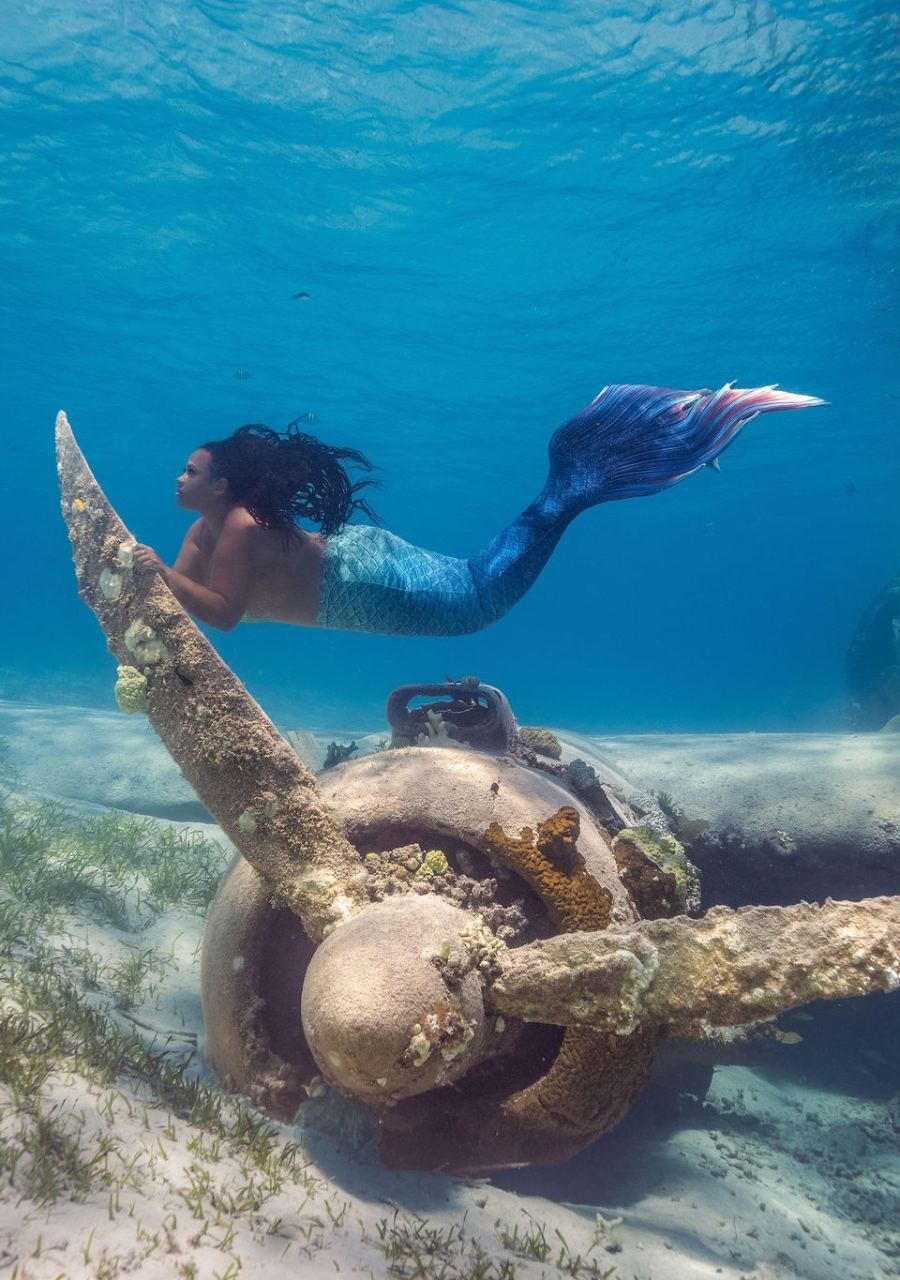
The single biggest difference between an amateur mermaid photo and a professional one is the arch. Underwater, a straight body looks stiff and heavy. A long curve from the collarbone through the hips to the fluke reads as swimming, even in a still frame.
Keep the chin lifted and the eyes open — closed eyes make you look unconscious rather than serene. Hands stay soft and separated from the body's outline. And the fluke should nearly always be visible and open; a tail hidden behind you is simply gone from the photograph.
- •Arch through the back, never a straight line
- •Eyes open, chin lifted slightly toward the surface
- •Keep the fluke in frame and turned toward the camera
- •Slow, exaggerated movement — water eats subtlety
- •Exhale a thin stream of bubbles for a natural expression
Where We Shoot Mermaid Sessions in Florida
Florida's freshwater springs are the reason mermaid photography looks the way it does here. The water is clear, close to 72°F year round, and lit from above by real sunlight — no strobe recreates it. Springs give you white sand, submerged trees and shafts of light in the same frame.
Heated pools are the alternative when the weather turns, when a client is new to breath-holding, or when we want full control over background and lighting. Both work; springs are more magical, pools are more predictable.
- •Springs: natural light, clear blue-green water, cool temperature
- •Heated pool: controlled, warm, ideal for first-time sessions and children
- •Ocean mermaid sessions are possible but weather and visibility dependent
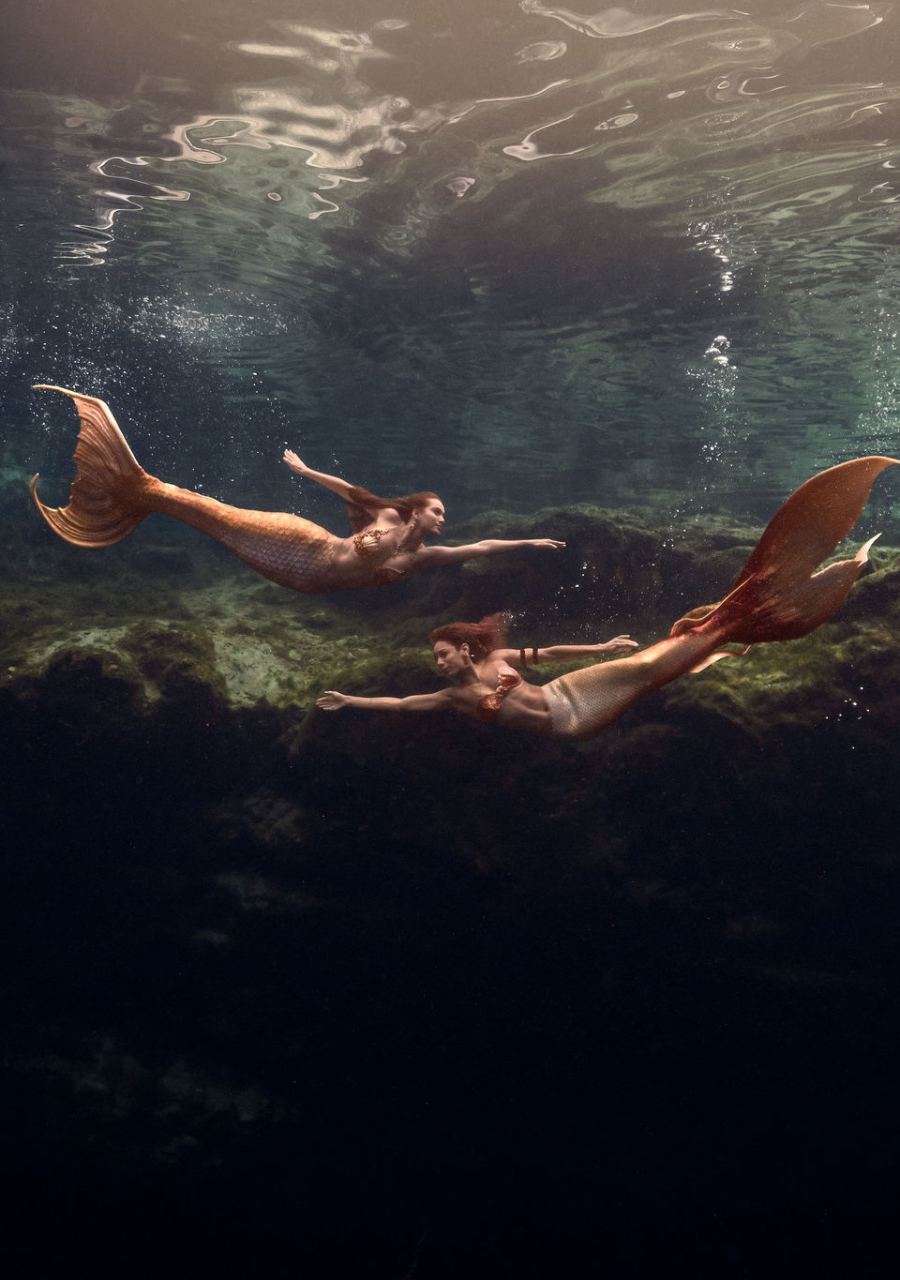
Hydrate well the day before, eat something light beforehand, and skip caffeine — it shortens your comfortable breath-hold noticeably. Waterproof makeup and a hair plan matter more than the outfit; loose hair moves beautifully underwater, pinned styles rarely survive the first descent.
Bring warm layers and a change of clothes for between sets. A typical session runs two to three hours including fitting, warm-up and breaks.
- •No caffeine on shoot day, plenty of water the day before
- •Waterproof mascara and long-wear foundation
- •Towels, a robe and a warm drink for the surface breaks
- •No glitter, sequins or loose beading — they shed into the springs
A mermaid session is priced like any other underwater portrait session with Water Bear: the session fee covers planning, the shoot day, safety support and the retouching of your selected images, with artwork and digital files chosen afterwards.
Tail rental, wardrobe and location access are discussed during the planning consultation, so you know the full figure before you commit. Full pricing is broken down in the cost guide.
Want to Photograph Mermaids Yourself?
If you are a photographer rather than a client, the Underwater Creatives Academy covers exactly this: housings, breath-hold safety, working with a model in a tail, natural light in springs, and the editing that makes the final image sing.
Do I need my own mermaid tail?
No. Studio tails and monofins in a range of sizes are available for sessions. If you own a tail you love, bring it — we will test how it moves during the fitting.
How long do I need to hold my breath for a mermaid photoshoot?
Five to fifteen seconds per frame. You surface and breathe between every attempt, and the whole session is paced around your comfort, not a stopwatch.
Can children do a mermaid photoshoot?
Yes, in a heated pool with a parent present and a properly fitted tail. Children usually take to it faster than adults do.
What is the best mermaid tail for photos?
A silicone tail is the most realistic on camera, but a good neoprene or scale-fabric tail with a stiff monofin photographs beautifully and is far easier for a first session.
Where are mermaid photoshoots done in Florida?
Mostly in the freshwater springs of North Central Florida for their clarity and natural light, and in heated pools when we want warmth and full control of the background.