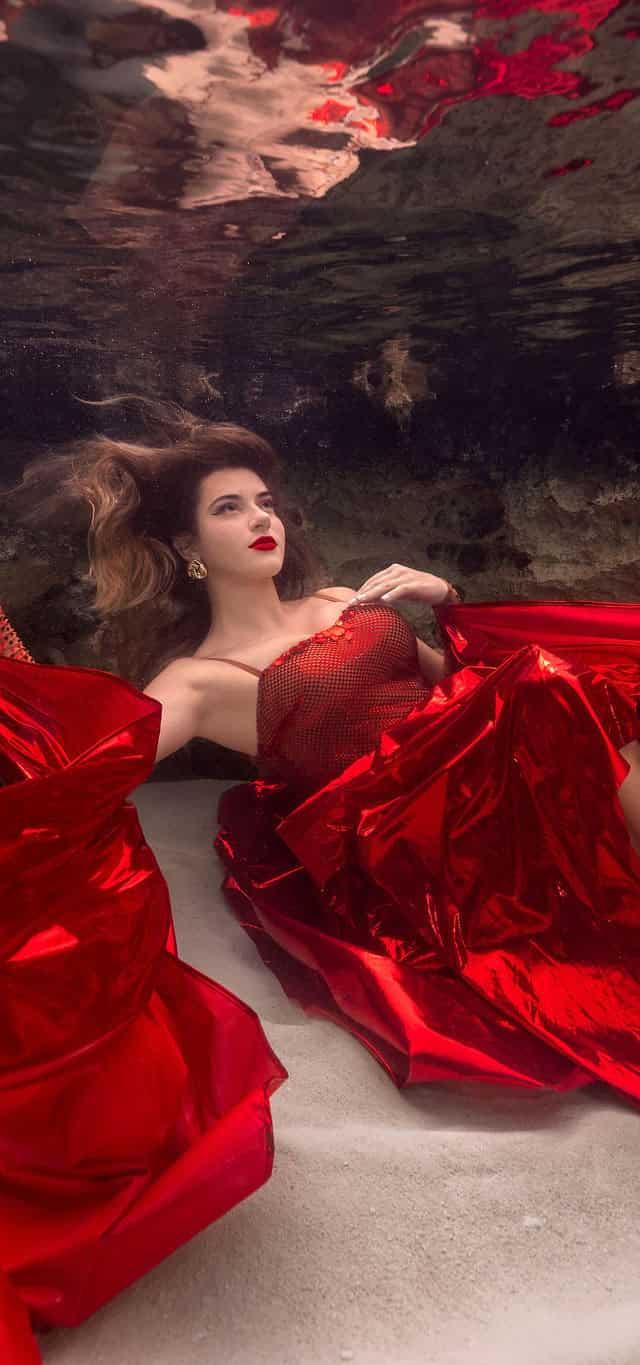
Wardrobe is the difference between an underwater photo that floats and one that flops. Water changes how every fabric behaves: it adds weight, it removes structure, and it turns the right piece of chiffon into something that looks like smoke. Here is how we choose what you wear for an underwater session.
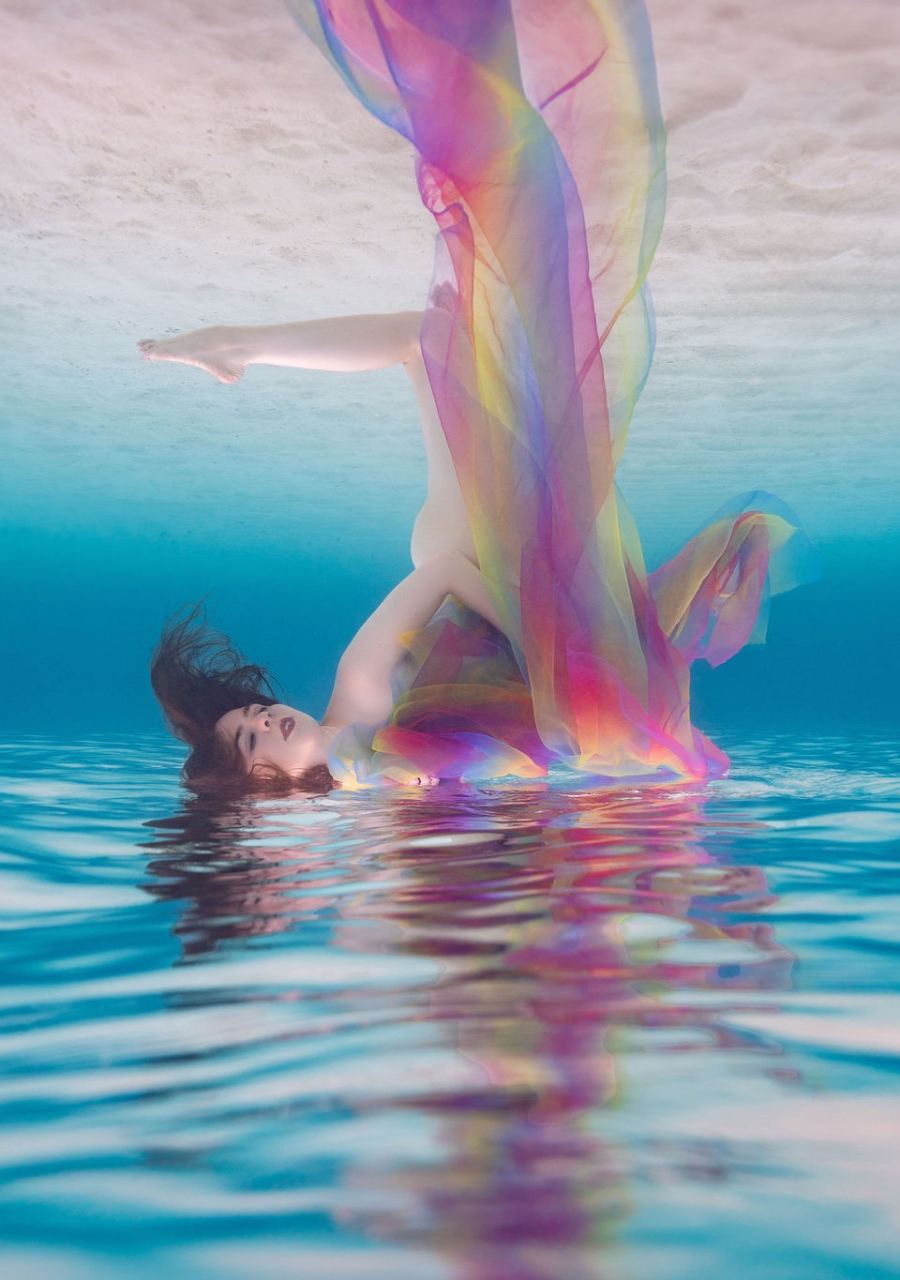
Before colour, before style, before anything: how does the fabric behave when it is wet? Lightweight and loosely woven material drifts and billows. Heavy, dense or highly absorbent material soaks, sinks and clings flat to the body.
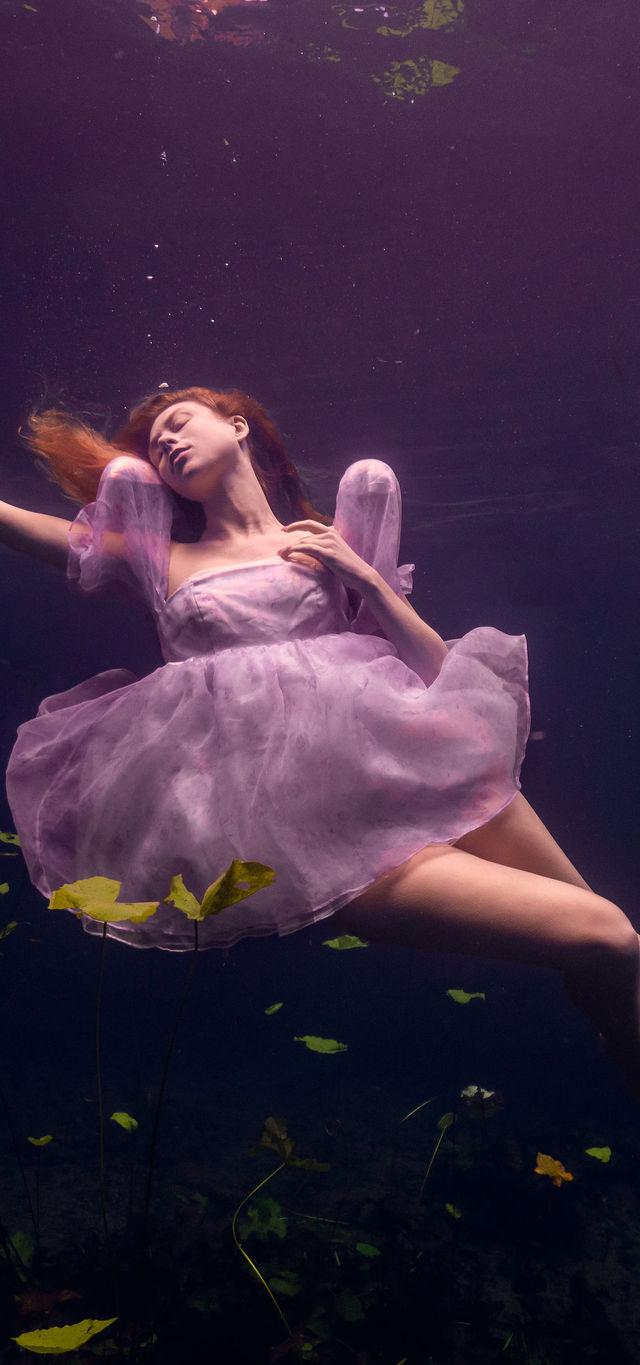
Chiffon, tulle, organza, light silk and thin jersey knits are reliable performers. Denim, thick cotton, structured satin, corsetry and anything padded are not.
- •Best: chiffon, tulle, organza, light silk, thin knits
- •Avoid: denim, heavy cotton, stiff satin, boning and padding
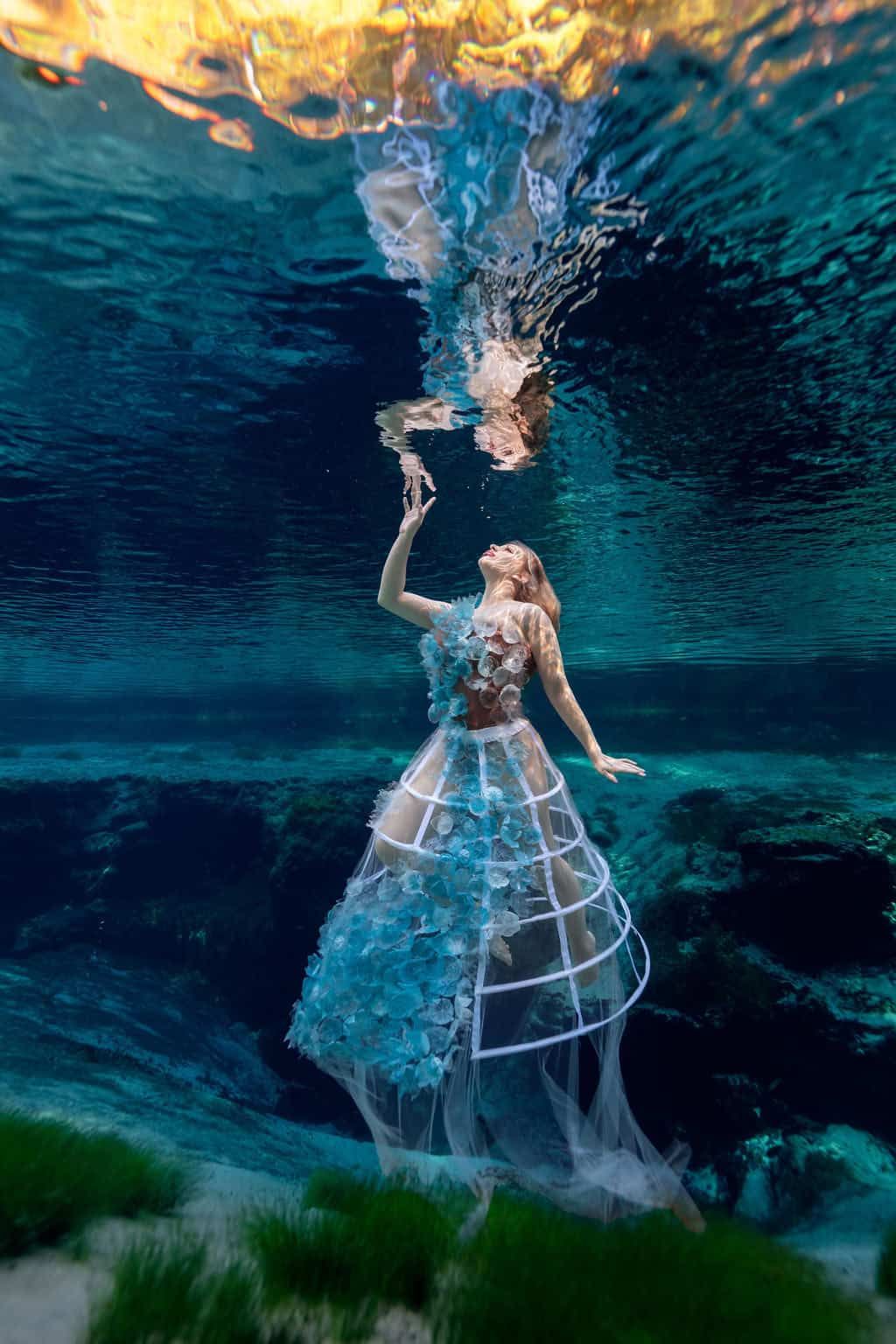
- •More fabric than you think — volume is what creates the movement
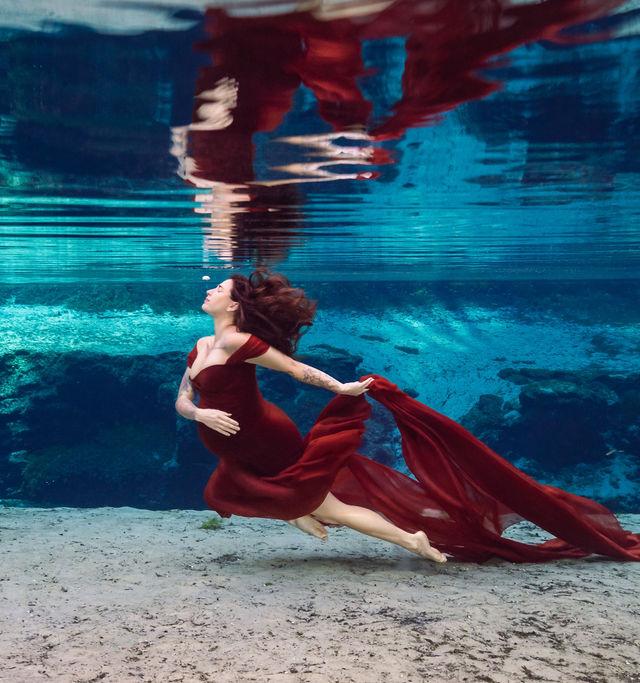
- •Long trains and wide sleeves photograph exceptionally well
Choosing Colours That Survive the Water
Water is not neutral. Springs push everything toward blue and green, and pools have their own cast. Colours with real saturation cut through that; washed-out pastels often disappear into the background.
Jewel tones — emerald, teal, deep red, royal blue — read strongly. Warm neutrals and creams glow beautifully against blue water. Pure white can work wonderfully but shows every wrinkle, so it needs enough fabric to stay in motion.
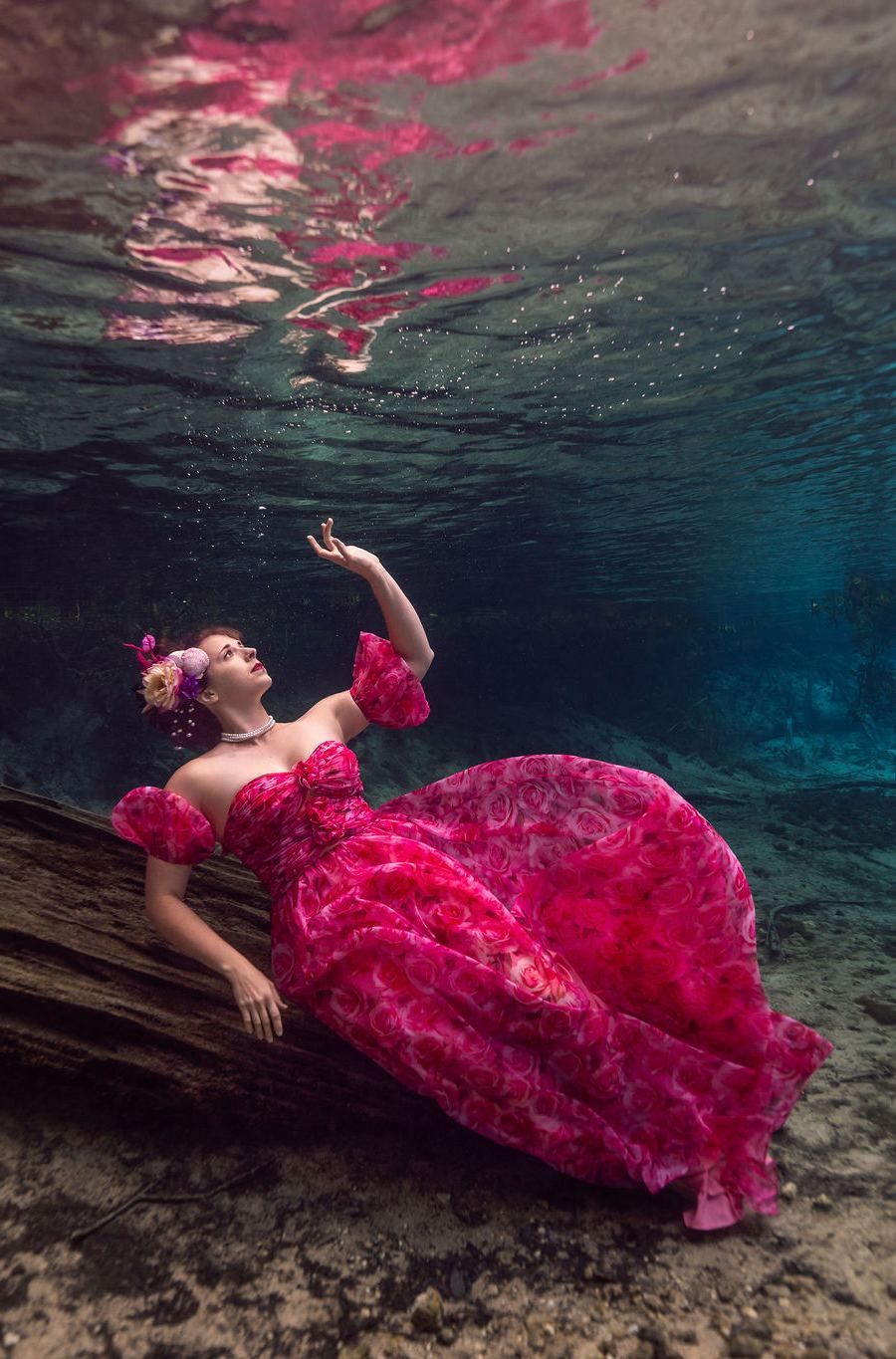
Fitted at one point, loose everywhere else, is the formula that works most often. A gown that is snug at the shoulders, bust or waist keeps the body readable while the rest of the fabric is free to move.
Fully loose garments can swallow the figure entirely once they inflate with water. Fully fitted garments give you a clean line but none of the drama people come to underwater photography for.
What to Leave at Home
Some things are not a style choice — they are a stewardship one. Anything that can shed into the water stays out of the water, especially at the springs.
- •No glitter, sequins or loose beading — they end up in the spring
- •No confetti, petals or props that cannot be fully retrieved
- •Skip heavy jewellery that will drag or come loose
- •Nothing borrowed that you would be heartbroken to see water-damaged
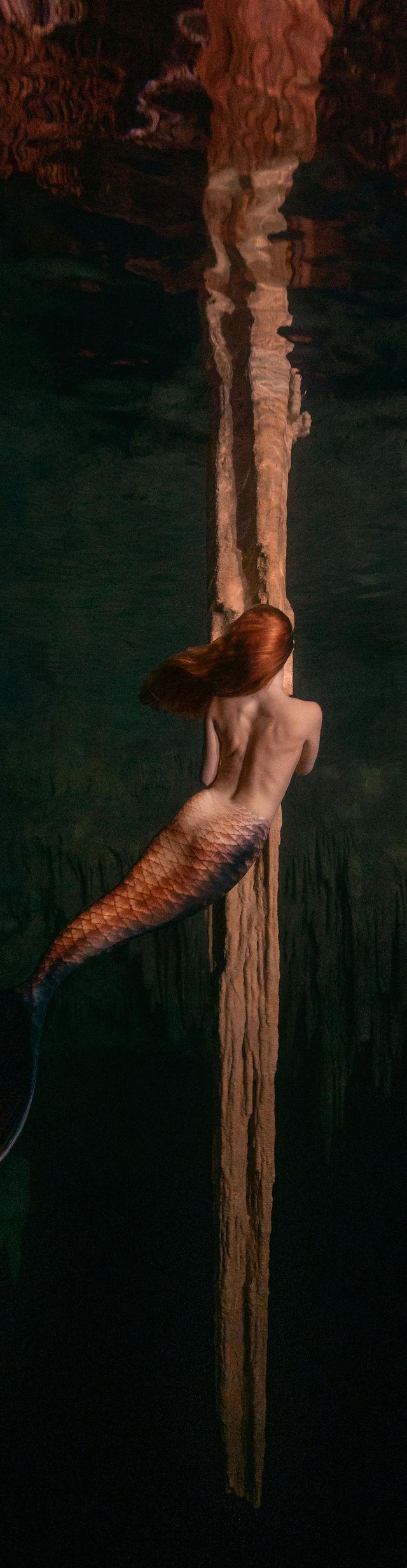
Hair is a wardrobe element underwater. Loose hair moves and adds enormous life to a frame; tightly pinned styles rarely survive the first descent. Waterproof makeup is worth it, and less is generally more once the water softens everything.
Skin, nails and simple accessories all show up more than you expect in a clean underwater frame, so we plan them during the design consultation rather than on the day.
Studio wardrobe pieces are available for sessions, chosen specifically because they behave well in water. During your planning consultation we pick fabrics and colours together against your location and the mood you want.
What is the best fabric for an underwater photoshoot?
Lightweight, loosely woven fabrics such as chiffon, tulle, organza and light silk. They stay buoyant and keep moving, which is what creates the flowing look.
Can I wear white underwater?
Yes, and it can be stunning. White needs plenty of volume so it keeps moving rather than clinging, and it shows creases, so it is steamed before the session.
Why is glitter not allowed?
Glitter and sequins shed into the water and cannot be recovered. Photographers have lost access to springs over exactly this, so we keep them out of every session.
Do I need to bring my own gown?
No — studio wardrobe pieces chosen for how they behave in water are available, and we select your looks together during the planning consultation.