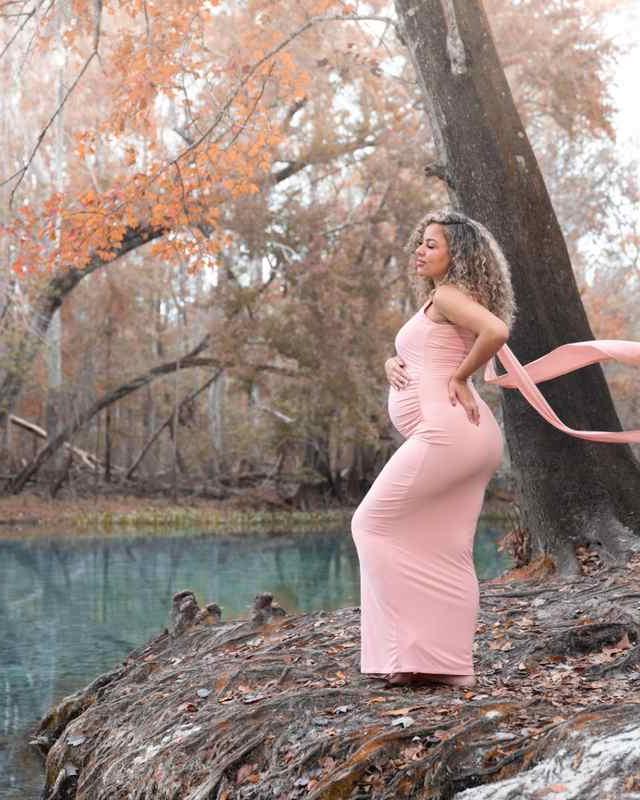
The dress does more work than almost anything else in a maternity photoshoot. It decides whether your bump reads clearly, whether the fabric moves, and whether the photos still look good in ten years. This guide covers what to wear for maternity photos in a studio, outdoors and underwater — fabric, color, sizing, rental options and the mistakes that are hard to fix after the fact.
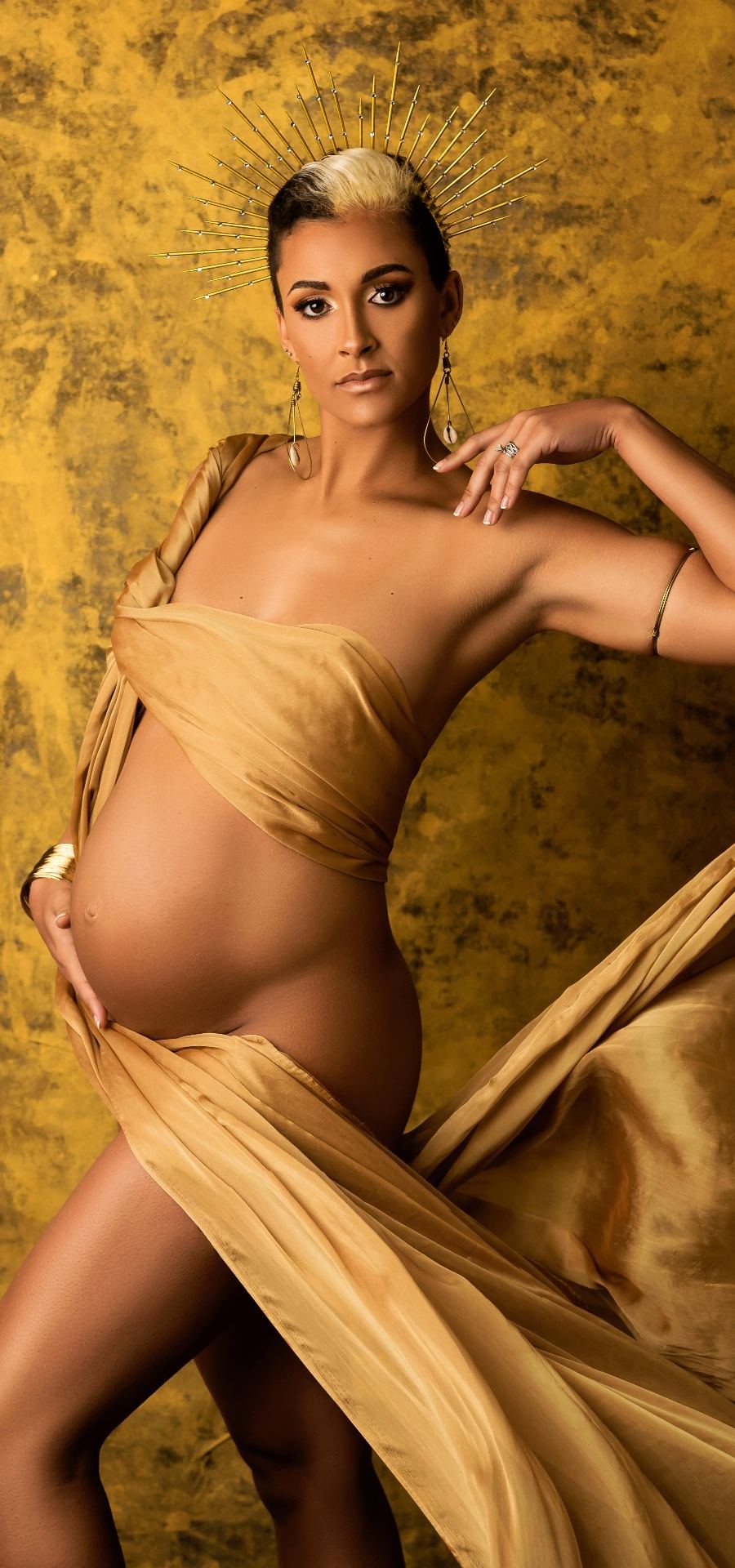
Fabric is the decision everything else follows. Lightweight, drapey material — chiffon, tulle, silk, jersey — moves with you and catches light. Heavy, stiff or structured material holds its own shape instead of yours and reads bulky in photographs.
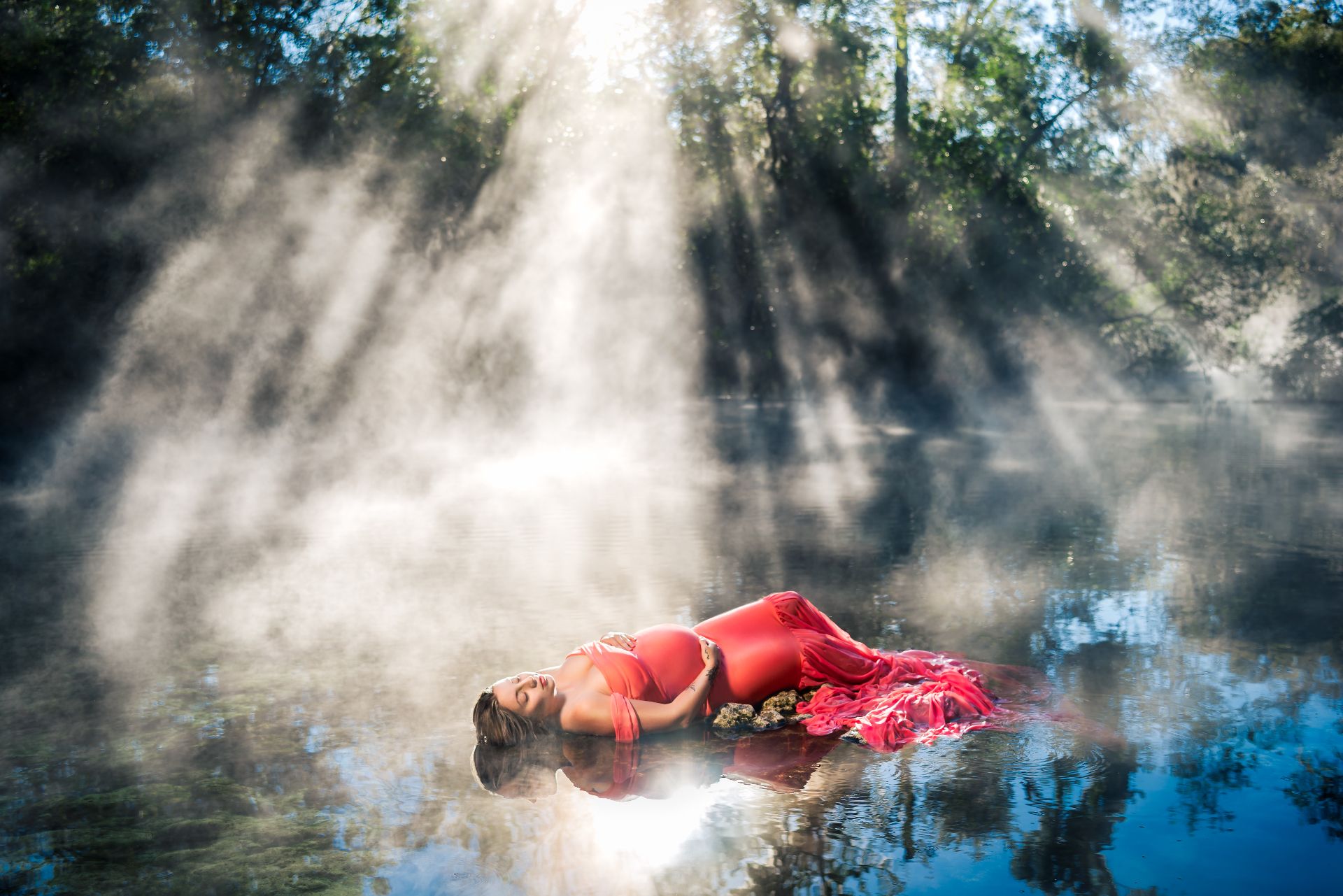
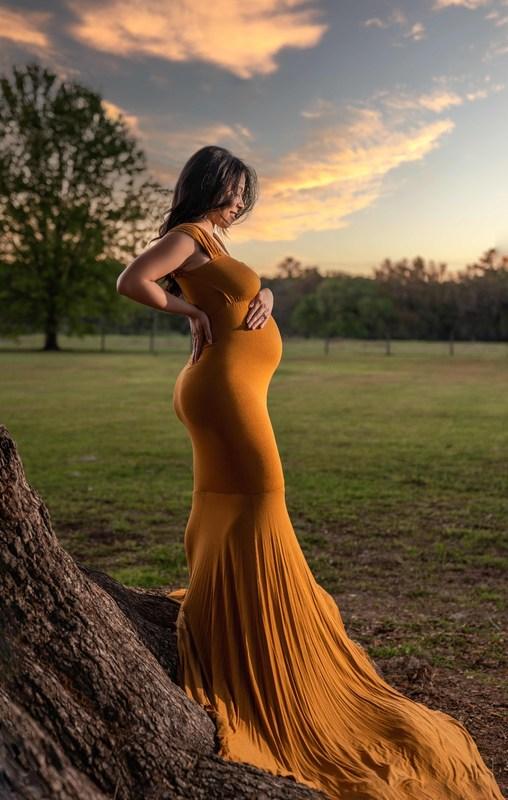
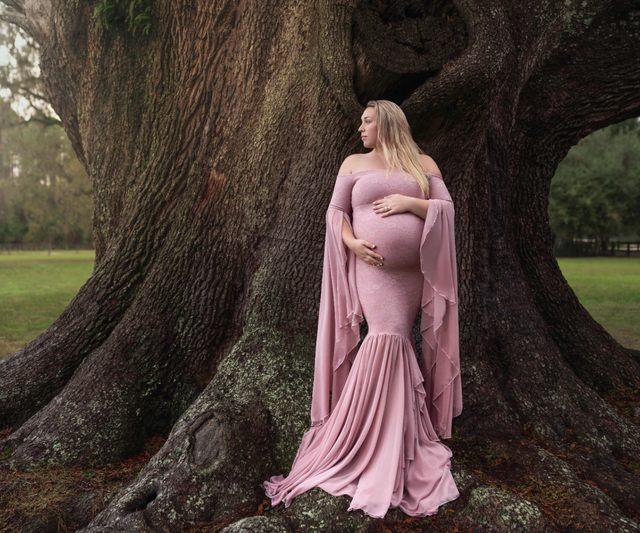
Two families of maternity dress work for photos, and they do different jobs. Fitted stretch jersey hugs the bump and shows the silhouette clearly. Flowing gowns with a long train create shape and movement. Most sessions use one of each.
- •Best for movement: chiffon, tulle, georgette, silk
- •Best for silhouette: stretch jersey, ribbed knit, bodycon
- •Avoid: stiff taffeta, heavy denim, thick brocade, boned bodices
- •Avoid sequins and glitter — they shed, and in water they end up everywhere
Choosing a Color That Photographs Well
Solid colors nearly always beat prints in maternity photography — a busy pattern pulls attention away from your face and your bump. Deep jewel tones, warm neutrals, cream, and true black all photograph beautifully across skin tones.
Match the color to the location rather than to a trend. Outdoors in Florida greenery, earthy rust, olive and cream sit naturally. In the studio, black and jewel tones give you that fine-art look. Underwater, deep saturated tones and whites hold up; very pale pastels can wash out completely.
- •Studio: black, emerald, burgundy, gold, cream
- •Outdoor golden hour: rust, terracotta, olive, dusty blue, ivory
- •Underwater: deep jewel tones, warm reds and oranges, clean white
- •Skip neon, logos, and small repeating prints
Order for the week you will be photographed, not for today. Between 28 and 36 weeks your measurements change quickly, and a dress that fits at booking may not fit on session day.
For flowing gowns, extra length is your friend — a train that pools on the floor or drifts behind you underwater reads as intentional. For fitted dresses, choose the size that stretches smoothly without pulling across the belly.
- •Buy the size that fits your bust and shoulders; the bump area is usually stretch
- •Long is better than short — hemlines that hit mid-calf shorten the frame
- •Try it on in advance and move in it: sit, walk, raise your arms
- •Adjustable ties, wraps and open-front robes handle late-pregnancy changes best
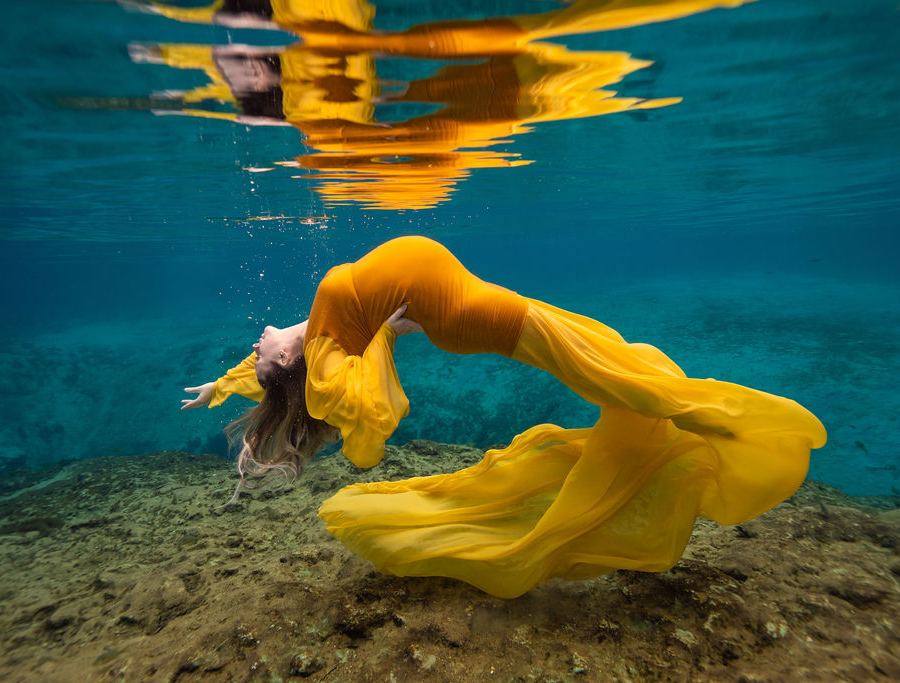
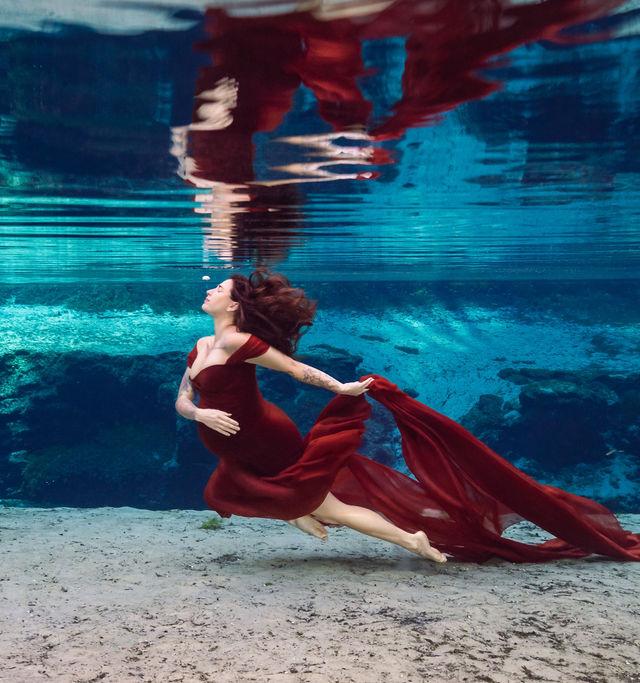
Underwater is where wardrobe choices get ruthless. A gown that looks stunning on a hanger can sink flat the second it gets wet. What you want is generous, light, non-absorbent fabric with a long train and plenty of surface area.
Skip anything lined, padded or heavily beaded. Lining traps water and drags the whole gown down, beading catches on itself, and stiff structure will not billow no matter how the shot is set up.
- •Unlined chiffon or tulle with a long, full train
- •Wide sleeves or a cape layer for extra movement
- •Saturated color so the gown does not disappear against blue water
- •Nothing that must be tied tightly — the water will undo it
Rent, Buy or Use the Studio Wardrobe
You do not have to buy a gown you will wear once. The studio wardrobe covers most sessions, and we choose your pieces together during the design and planning consultation, matched to the location and the mood you want.
If you do want your own, buy early enough to try it on and, for underwater sessions, to test how it behaves when wet. Photograph-ready is not the same as pretty on a hanger.
Most maternity portraits are barefoot or full-length, so shoes rarely matter. What does matter is what happens at the edges of the frame: tight elastic marks, a visible bra line under a sheer gown, or chipped polish on the hands that will be resting on your bump.
- •Avoid tight socks, hair ties on the wrist and snug waistbands for a few hours before
- •Seamless nude underwear under sheer fabric; strapless or none under open backs
- •Have your nails done — hands are in almost every maternity frame
- •Professional hair and makeup holds up far better under studio light and in water
What should I wear for maternity photos?
A fitted stretch piece that shows the bump clearly, plus a long flowing gown in a solid color for movement. Avoid busy prints, stiff fabrics and short hemlines.
What size maternity dress should I order for a photoshoot?
Order for the week of the shoot, sized to your bust and shoulders, with stretch or an adjustable wrap through the belly. Longer is better than shorter.
Do I have to buy a maternity gown?
No. Studio wardrobe pieces are available and we select them together during your planning consultation.
What colors photograph best for maternity photos?
Solid deep jewel tones, warm earthy neutrals, cream and black. In water, saturated colors and white hold up best; pale pastels can wash out.
Can I wear my own dress underwater?
If it is unlined, lightweight and full. Lined, beaded or structured dresses absorb water and sink instead of floating.