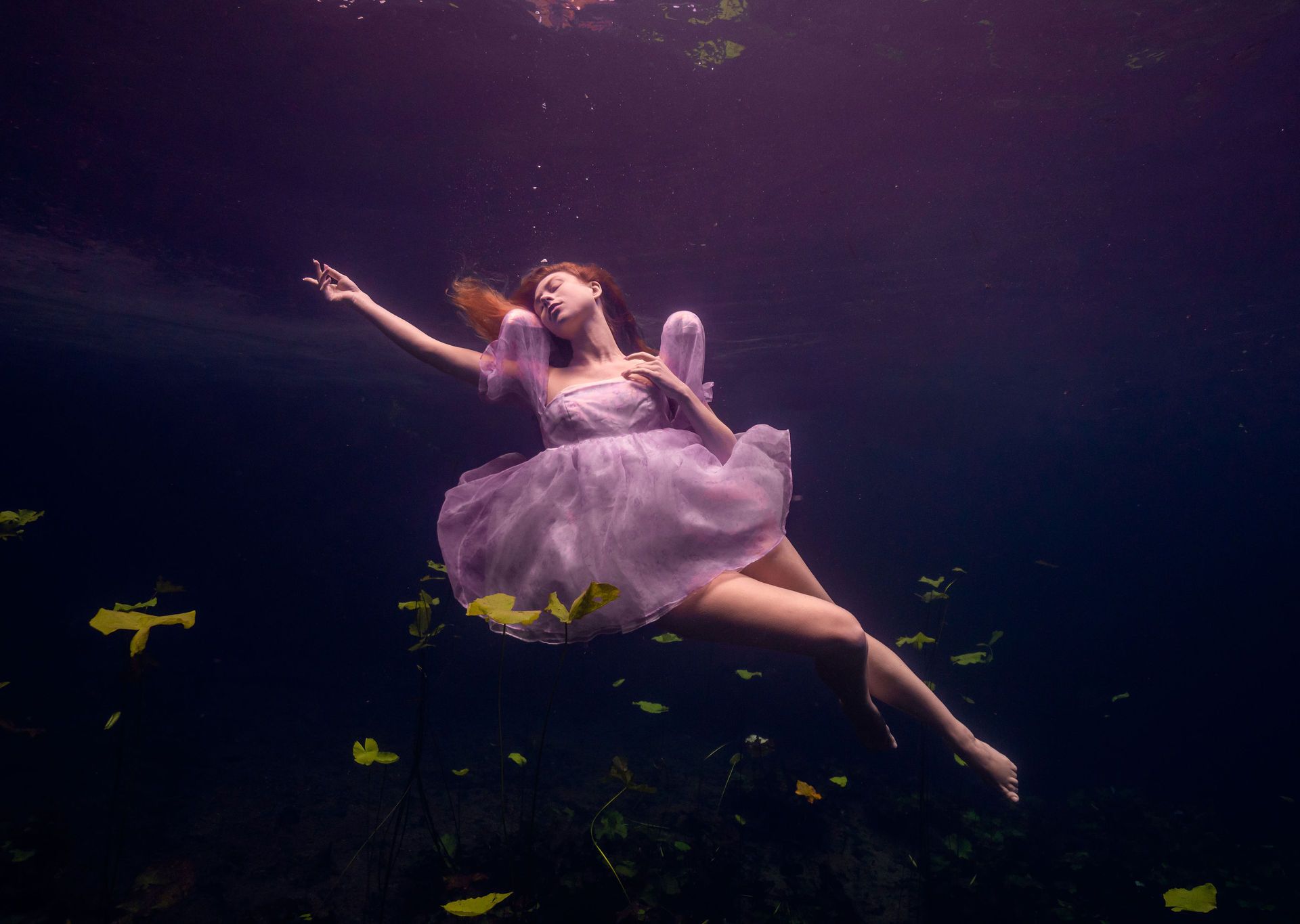
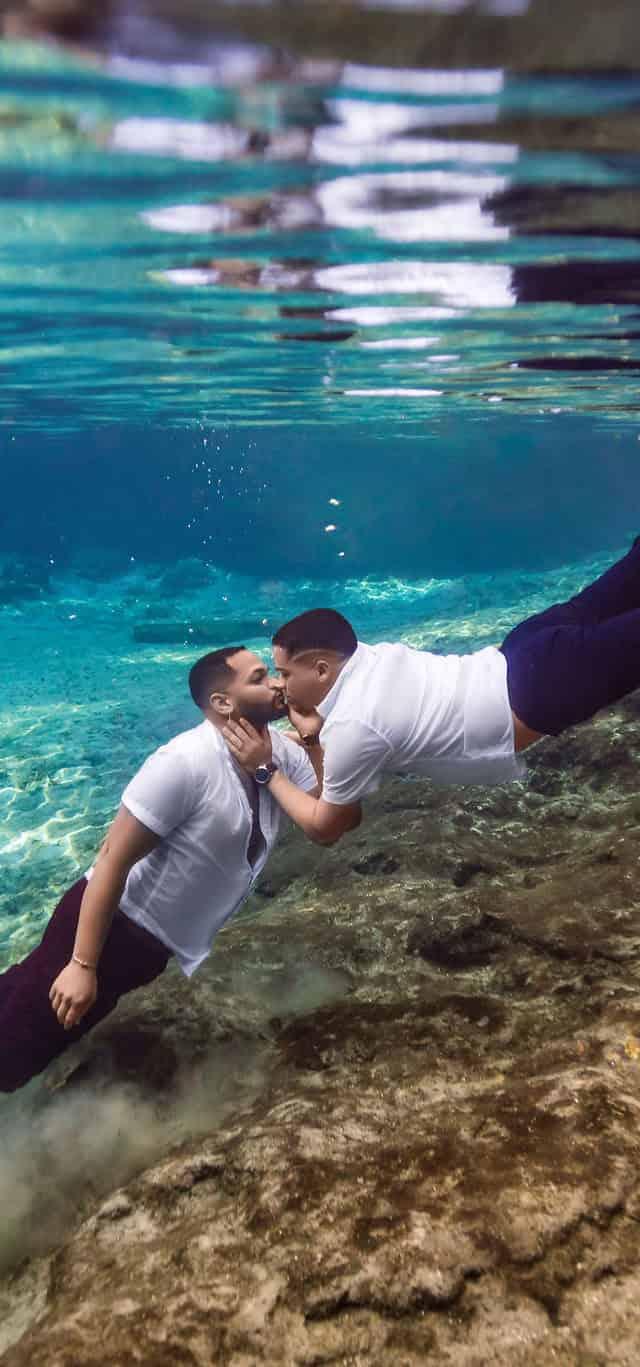
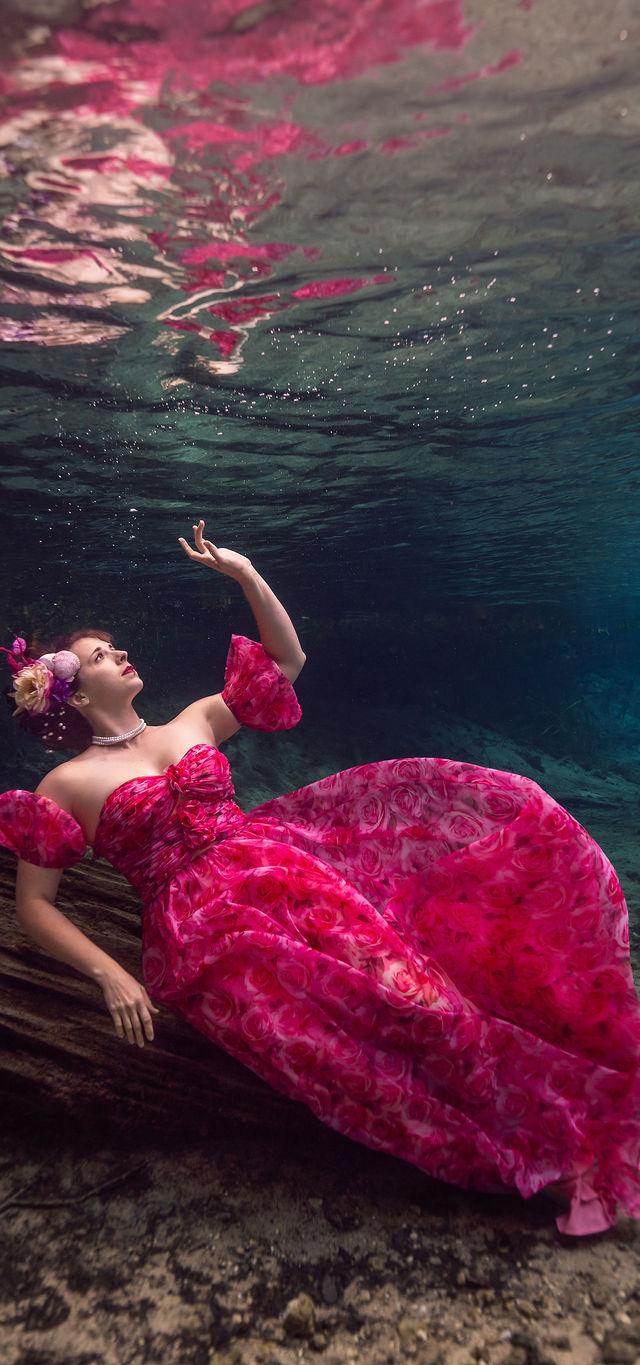
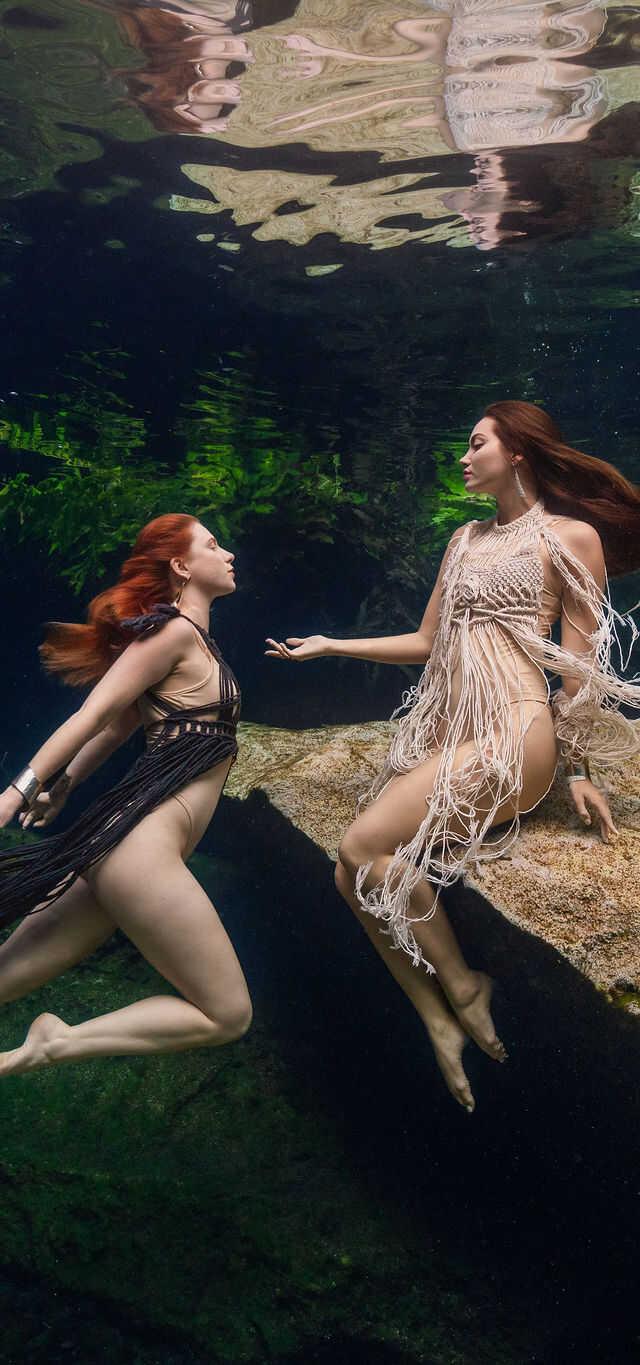
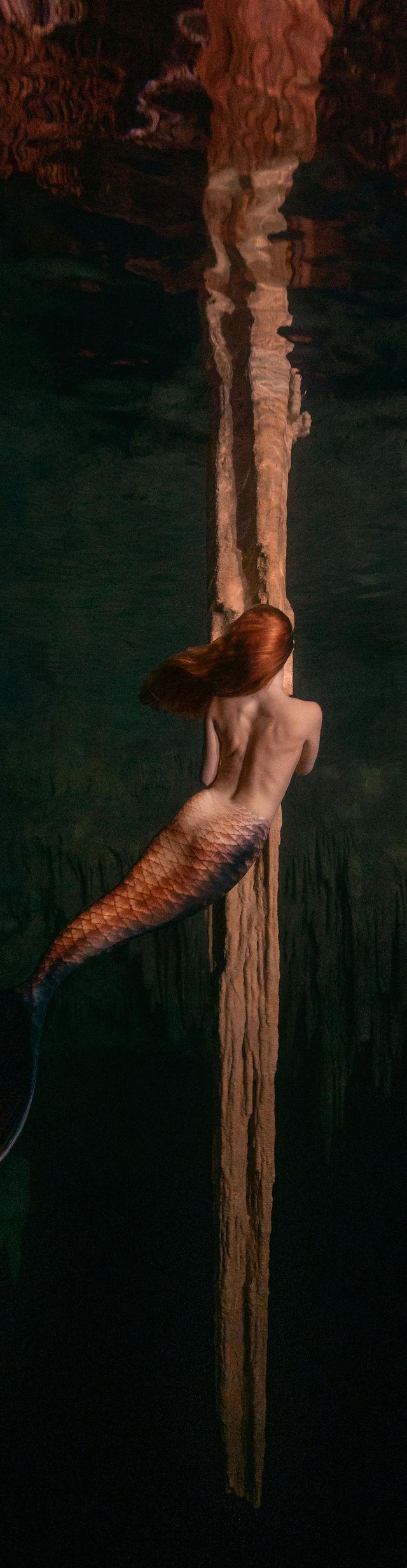
North Central Florida has hundreds of springs, and no two behave the same way. Clarity, flow, depth, temperature and park rules all change what is possible with a camera. This guide is about choosing the right water for your session — pool, spring or ocean — before you fall in love with a photo you cannot recreate.
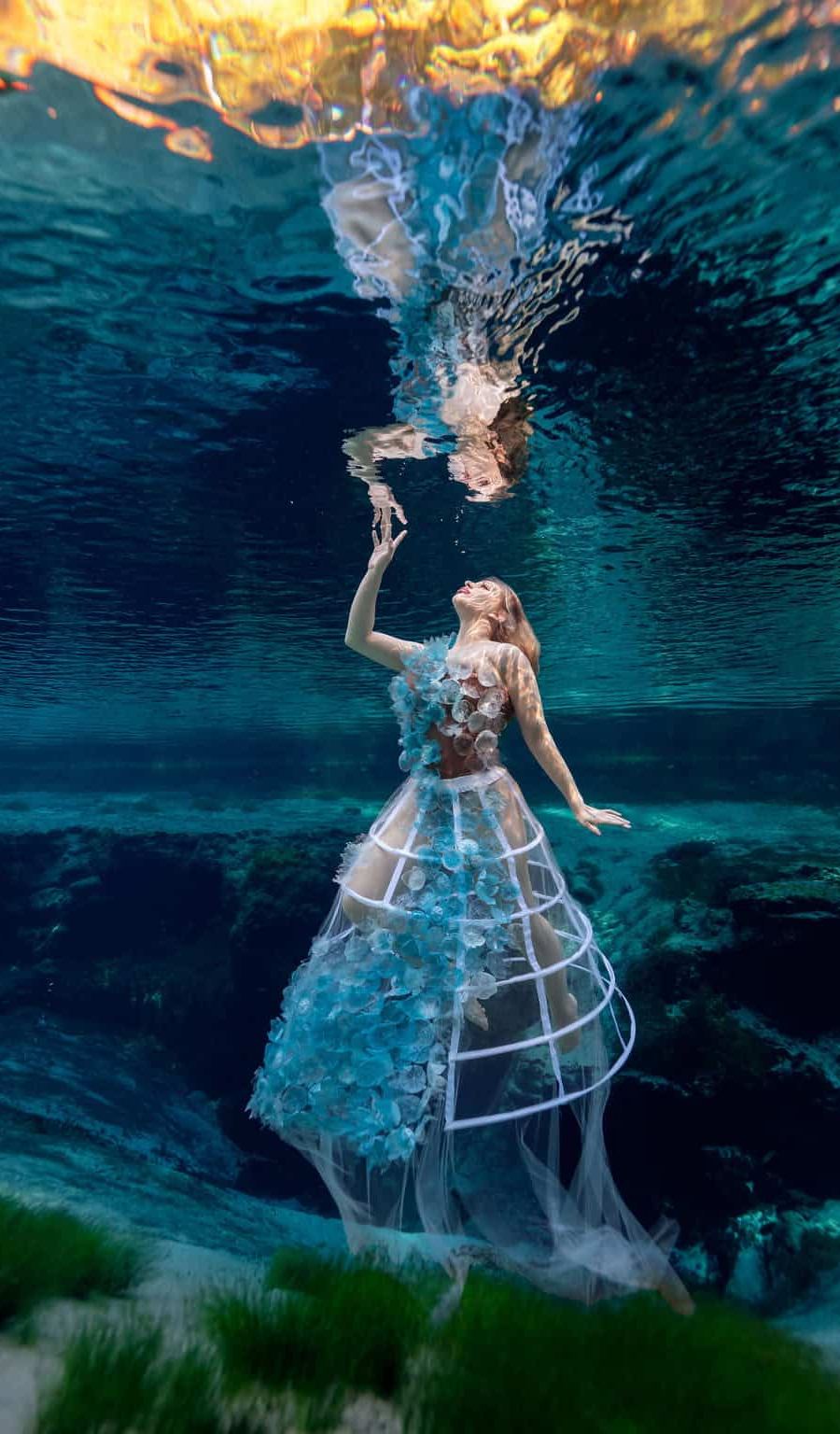
A pool is where most people should start. The water is warm, the clarity never surprises you, there is no current, and there are no other visitors in the background. That control means we spend the session on you rather than on conditions.
Pool sessions are also the easiest place to shoot dramatic wardrobe, because nothing is fighting the fabric except you.
Florida's Springs: The Blue You Cannot Fake
Springs give you that unmistakable clear blue water, sand bottoms, cypress roots and sunlight cutting through in shafts. They also give you flow, cooler water, and rules that change without notice.
Photography at Florida state parks is permitted as long as it does not impede normal park function — you cannot ask people to move, take over an area, or behave as though you own the place. Conditions and regulations change, so we confirm before every session.
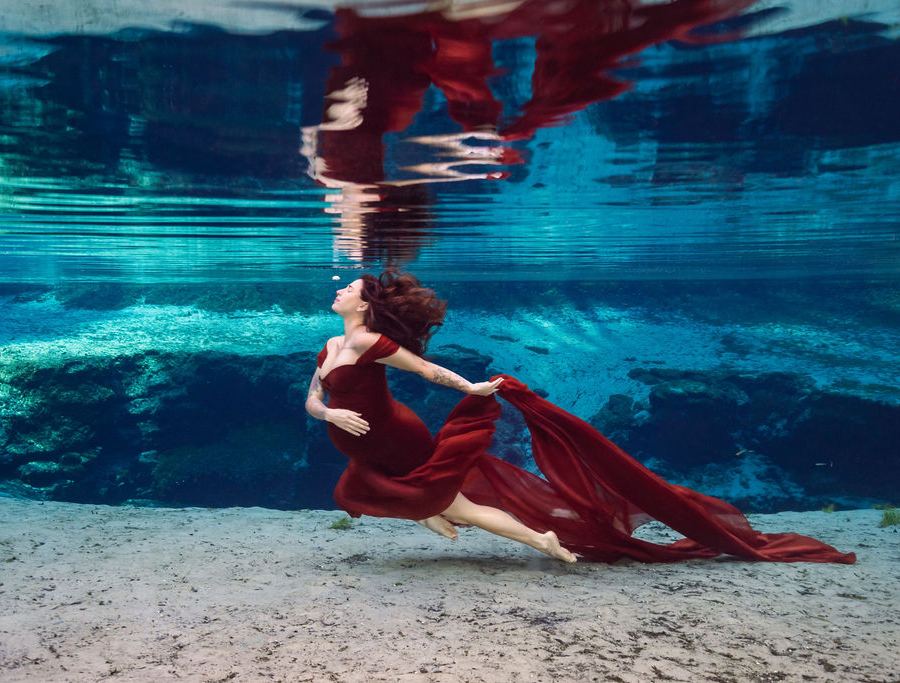
- •Ruth B. Gilchrist Blue Springs State Park — low flow, sandy bottom, famously crystal-blue water; one of the best underwater springs anywhere, though above water there is currently little to see and the park closes December to May for repairs.
- •Ichetucknee Springs State Park (North Entrance) — the head spring is off-limits to tubers, which keeps the water clear in the busy months. A rock floor that turns rainbow-coloured in sunlight. Slightly more flow, so everyone in the water should be confident.
- •Kelly Rock Springs (county park, Apopka) — lush jungle above water, crystal water below, but strong current and a maximum depth of about five feet. Current limits who is comfortable here and what wardrobe works.
- •Alexander Springs (Ocala National Forest) — a huge basin with a gradually deepening beach entry and low flow, which makes it a comfortable choice for client sessions.
- •Ginnie Springs — privately owned rather than a state park, with four springs on site and hot showers. Notably more expensive than the state parks, and as a private property they decide whether photographers are admitted.
We All Have a Responsibility to These Places
Springs have been closed to photographers because of people who left glitter, confetti or props behind, wandered into off-limits areas, or crowded wildlife. Every Water Bear session follows Leave No Trace principles, and nothing goes into the water that cannot come back out with us.
Many springs also have their own restrictions on buoys, food near the water and equipment. We check current rules before each shoot rather than assuming last season's still apply.
Location follows three things: your comfort in water, the look you want, and the time of year. A first-time swimmer in December is a pool session. A confident swimmer chasing that blue-water look in summer is a spring session. Sometimes the answer is both, split across one day.
Travel beyond North Central Florida is available for destination sessions.
Can you photograph underwater at Florida state parks?
Yes, as long as the shoot does not impede normal park function. You cannot ask visitors to move or take over an area, and rules can change at any time, so we confirm before each session.
Is a pool or a spring better for an underwater photoshoot?
A pool gives controlled temperature, clarity and privacy, which is ideal for a first session. Springs give the natural blue water and scenery that a pool cannot reproduce, but bring flow, cooler water and park rules.
How cold are the Florida springs?
Springs stay cool year round compared to a heated pool. We plan session length and breaks around that, and many clients choose a pool for winter sessions.
Do you travel for underwater sessions?
Yes. Sessions are based around Gainesville and North Central Florida, and travel is available for destination shoots.